
Sliding Door Repair Gallery: Parts, Problems and Repairs
See what worn rollers, damaged tracks, failed locks and fogged glass look like, and what each repair involves, so you can recognize your own door's problem before you call.
Rollers and tracks
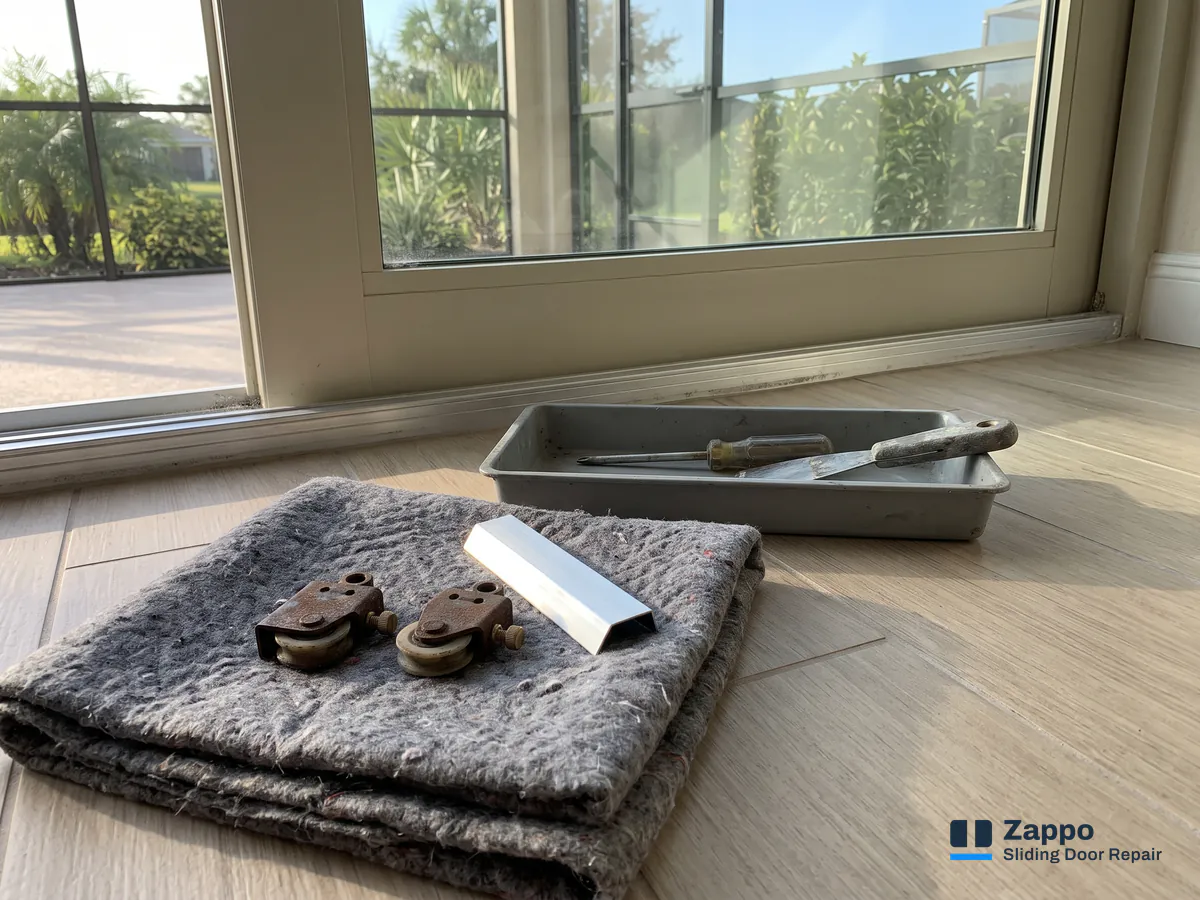
Laying out roller assemblies, a cap strip and hand tools on a blanket keeps parts organized and protects the tile while the sill track and rail are worked on. 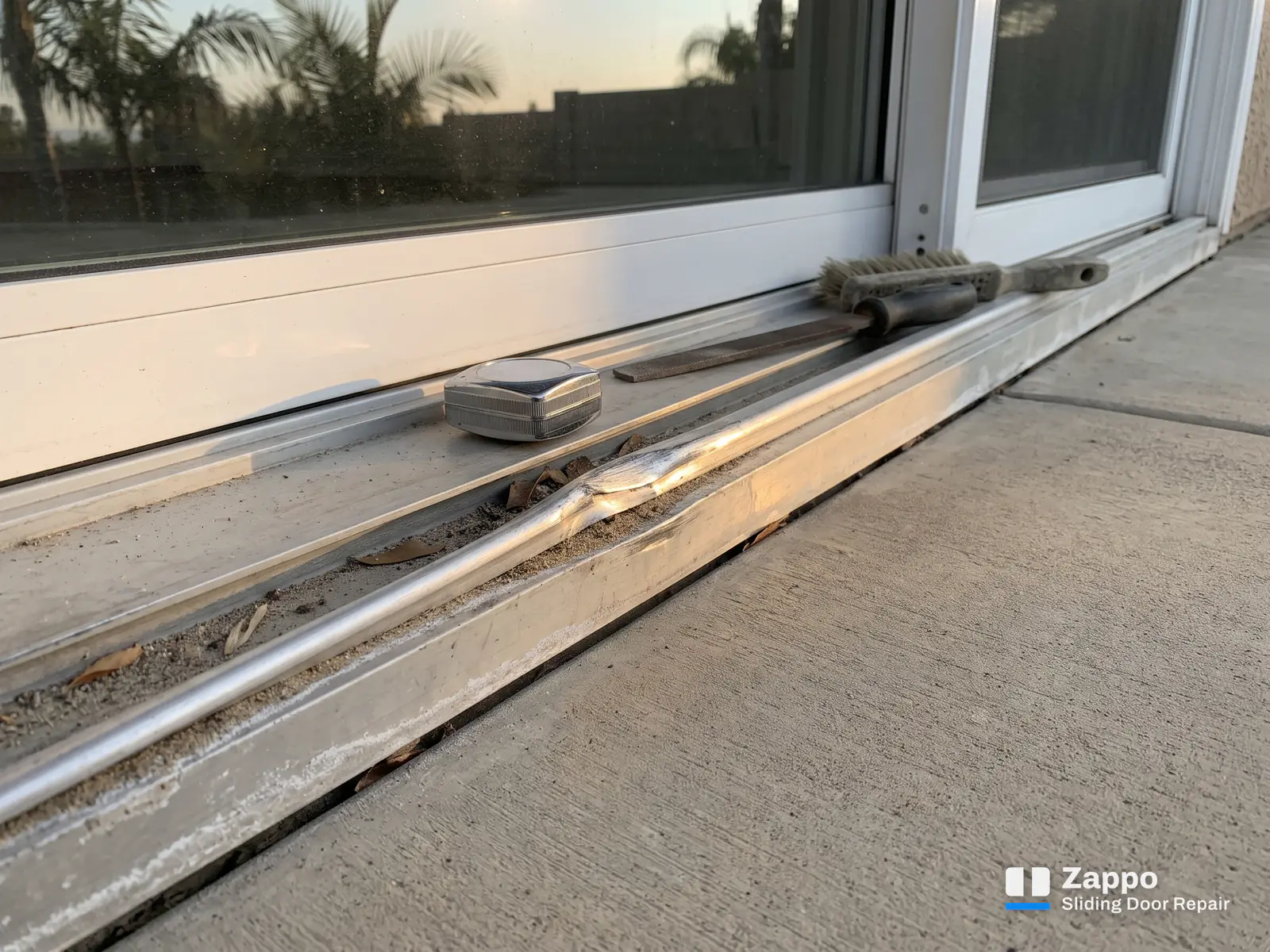
Gallery view of a sill track with a kinked rail, where a track file and stiff brush sit beside the bend, tools used to smooth the rail and clear packed sand.


Locks and handles
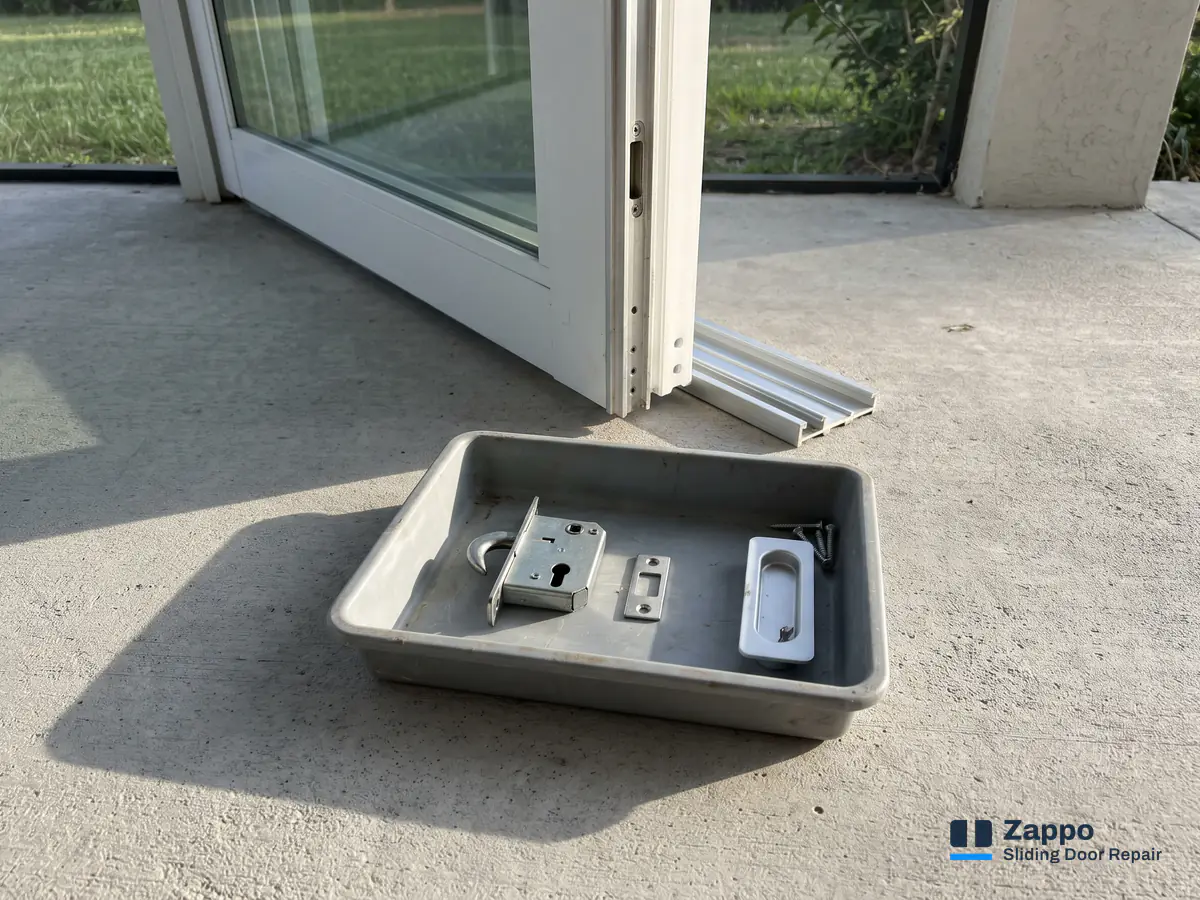
Lock parts are set out together in a tray as they come off the latch stile. This keeps the keeper, handle and screws in one place for matching during reassembly. 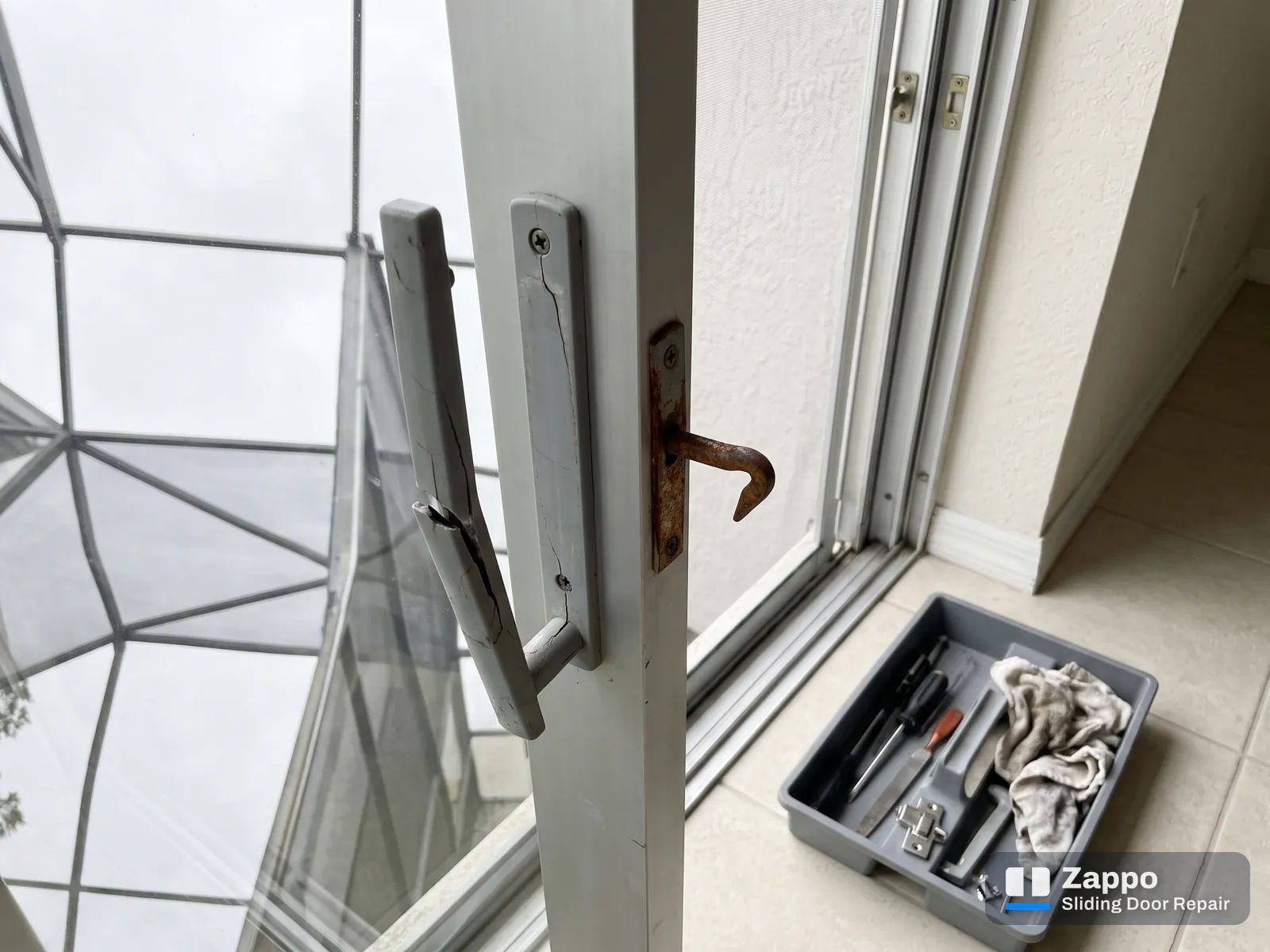
Lock and handle work begins with diagnosis: the broken pull handle, hook latch and keeper are examined while replacement parts and hand tools wait in the tray.


Glass
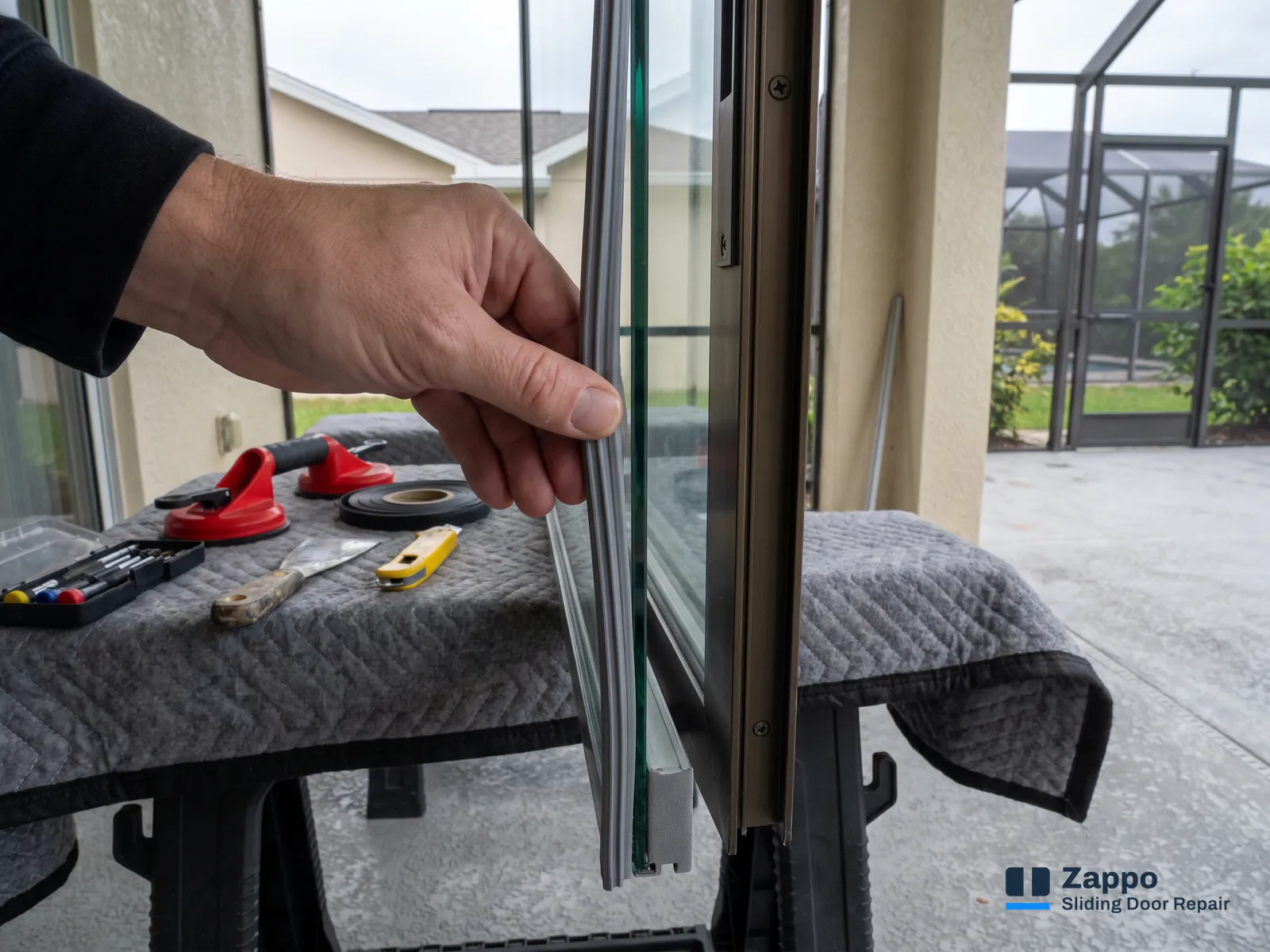
A gallery view of glass work in progress: a gasket pressed onto an insulated glass unit edge, with hand tools laid out on a moving blanket nearby. 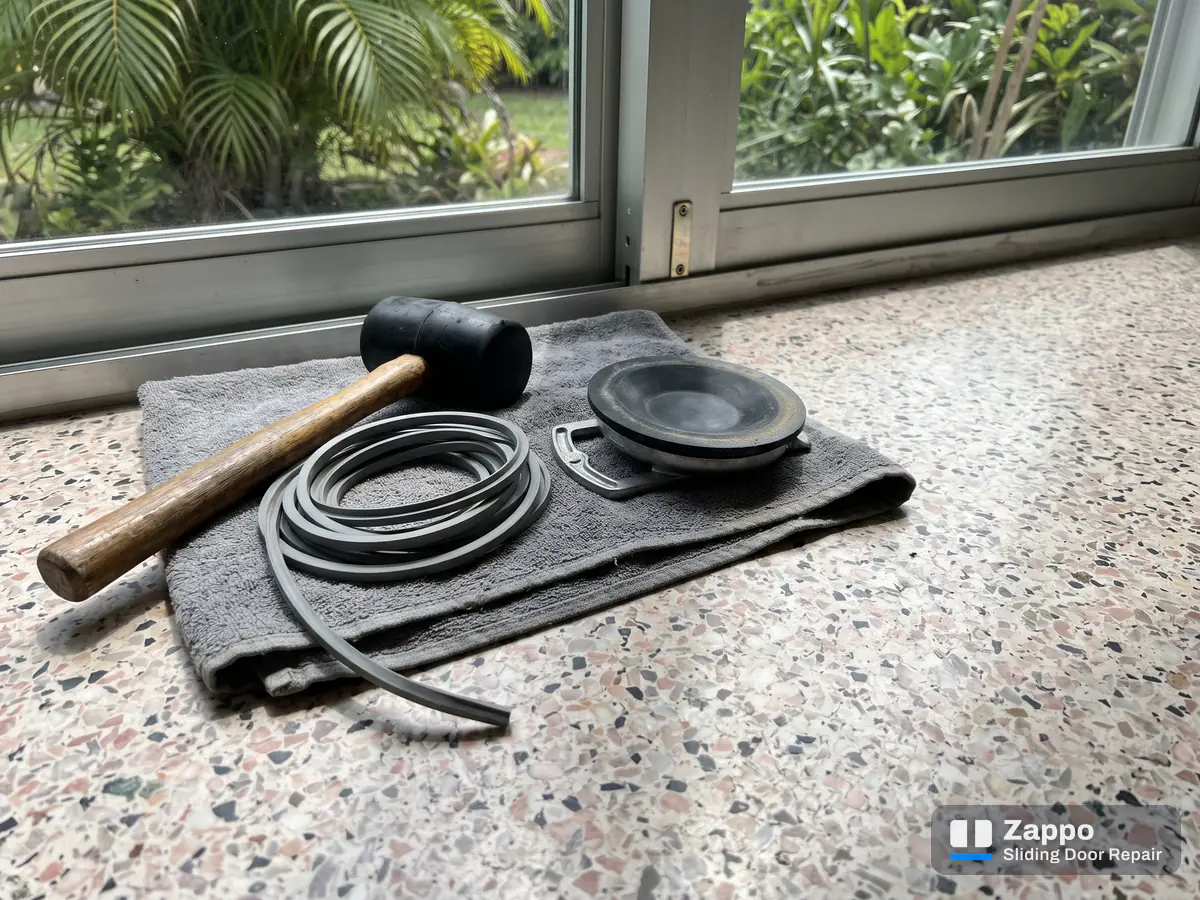
A glass-handling kit laid out on a towel keeps tools clean and within reach. The suction cup lifter carries glass panels, and the mallet and gasket seat the glazing. 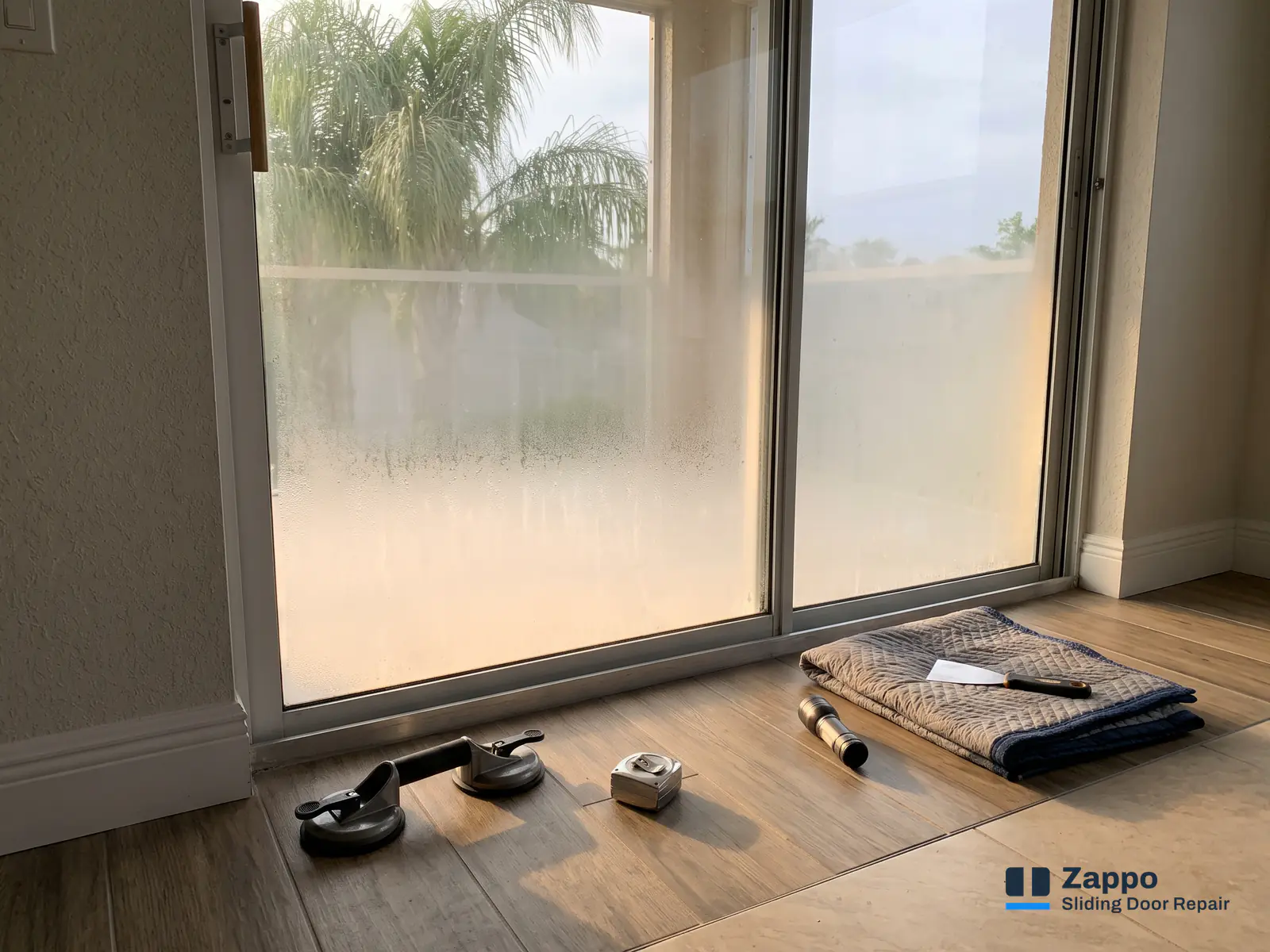
Tools laid out beside a sliding glass door with a hazy insulated glass unit: suction cup lifters, tape measure, flashlight and blanket ready for glass work.


Screens and patio doors
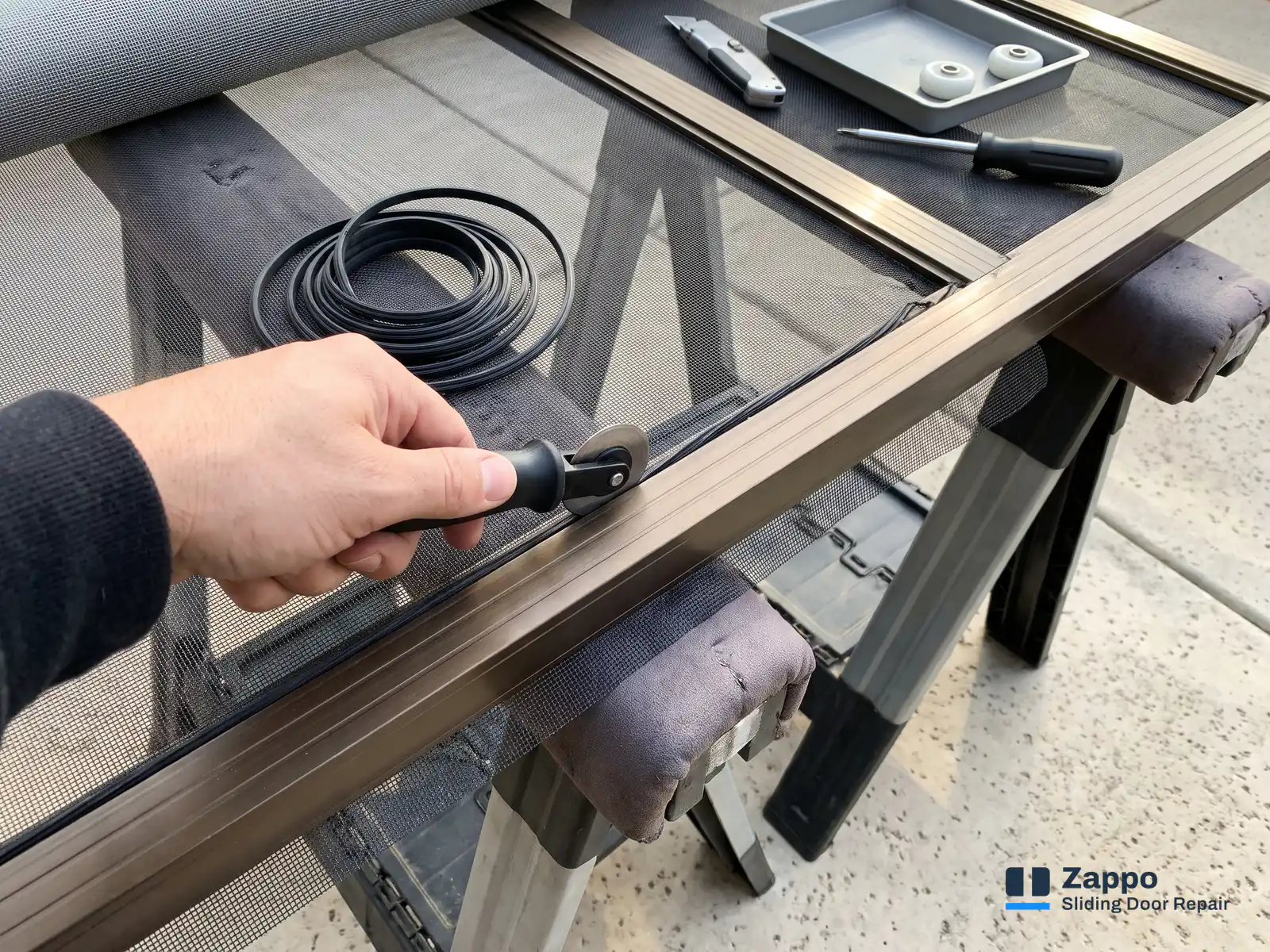
Screen door frame laid flat on sawhorses, with the spline roller, spline coil, utility knife and screwdriver within reach while the mesh is being set. 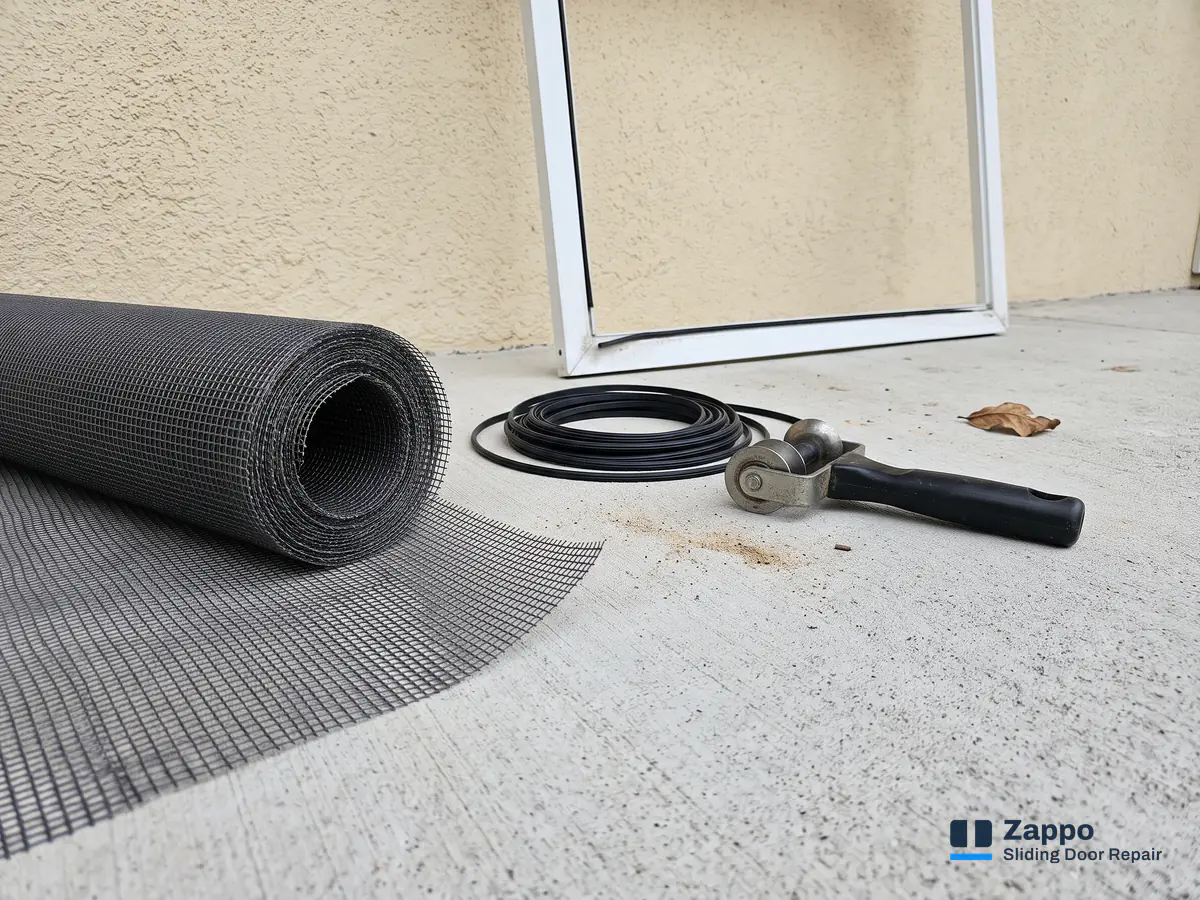
Screen door re-screening starts with the mesh, spline and spline roller laid out within reach, plus a clear look at the empty frame and its spline groove. 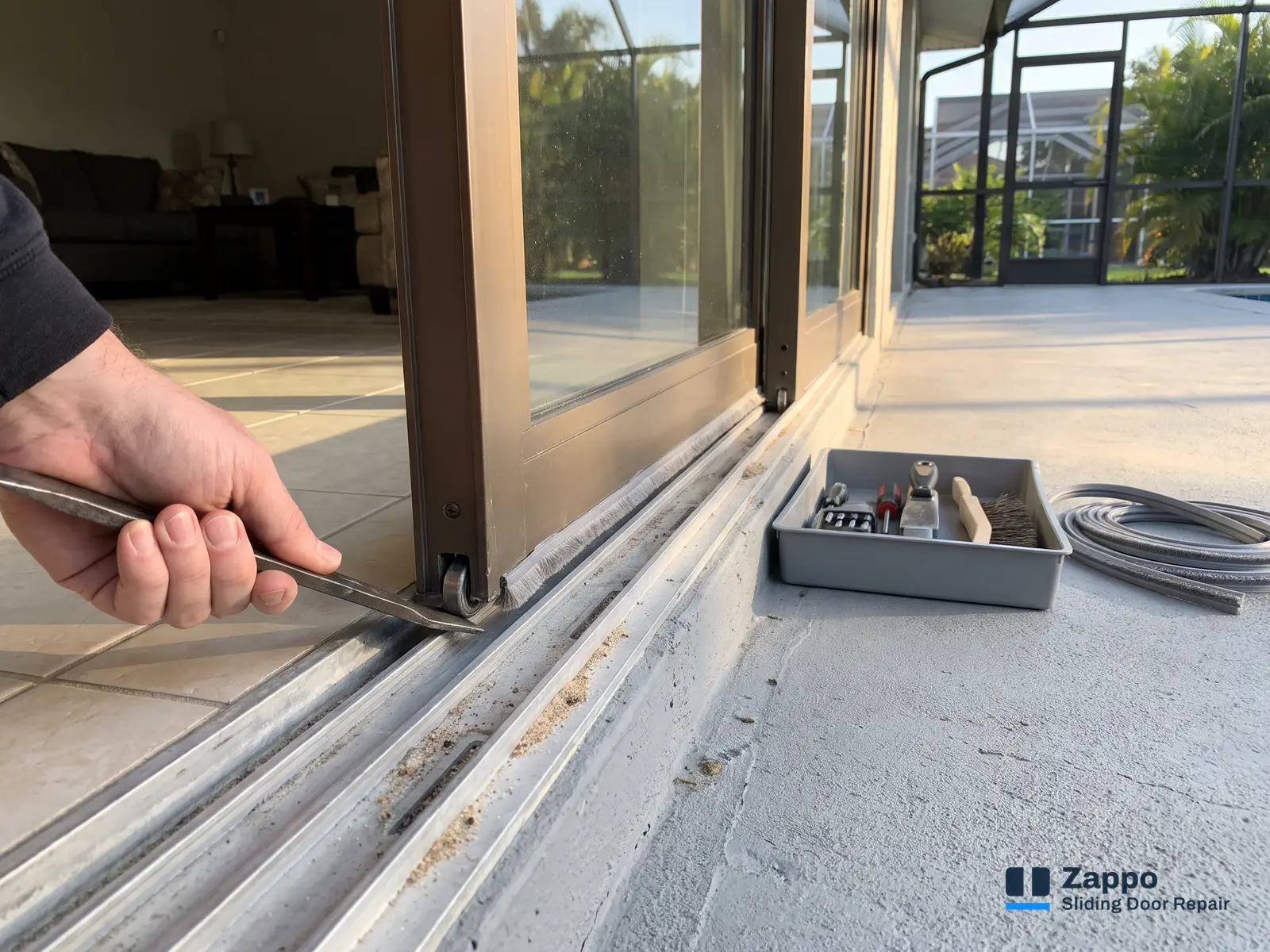
Work in progress at track level: a flat bar eases a roller onto the rail, with brushes, a putty knife and spare weatherstrip laid out in a tray.


Need service today?
Call now for fast, friendly service across Tampa, FL.